Structured data is your business details written in a format search engines read directly, rather than having to work out from your page text. You fill it in once on the Structured Data screen under SEO, and it applies across your site.
What structured data actually does
A search engine reading your contact page has to guess. Is that a phone number or an order reference? Is that address yours or a supplier's? Are those numbers your opening hours?
Structured data removes the guessing. It says, plainly and in a standard format: this is the business name, this is the phone number, these are the opening hours. Search engines trust that more than text they had to interpret.
In practice it makes it more likely that your details show correctly when someone searches for your business, and it feeds the panels and rich results that appear alongside ordinary listings. It does not guarantee any particular display, since that is the search engine's decision, but without it they are working from guesswork.
What to fill in
Work through the screen and complete what applies. Accuracy matters more than completeness, but complete and accurate is best.
- Business identity. Your business name and what kind of business it is. Use the name customers know you by, and match how it appears on your signage, invoices and other listings.
- Contact details. Phone number and email address. Use the ones a customer should actually reach you on, not a mailbox nobody checks.
- Address. Your physical location. If you serve customers at their own premises and have no address you want published, think about whether to fill this in.
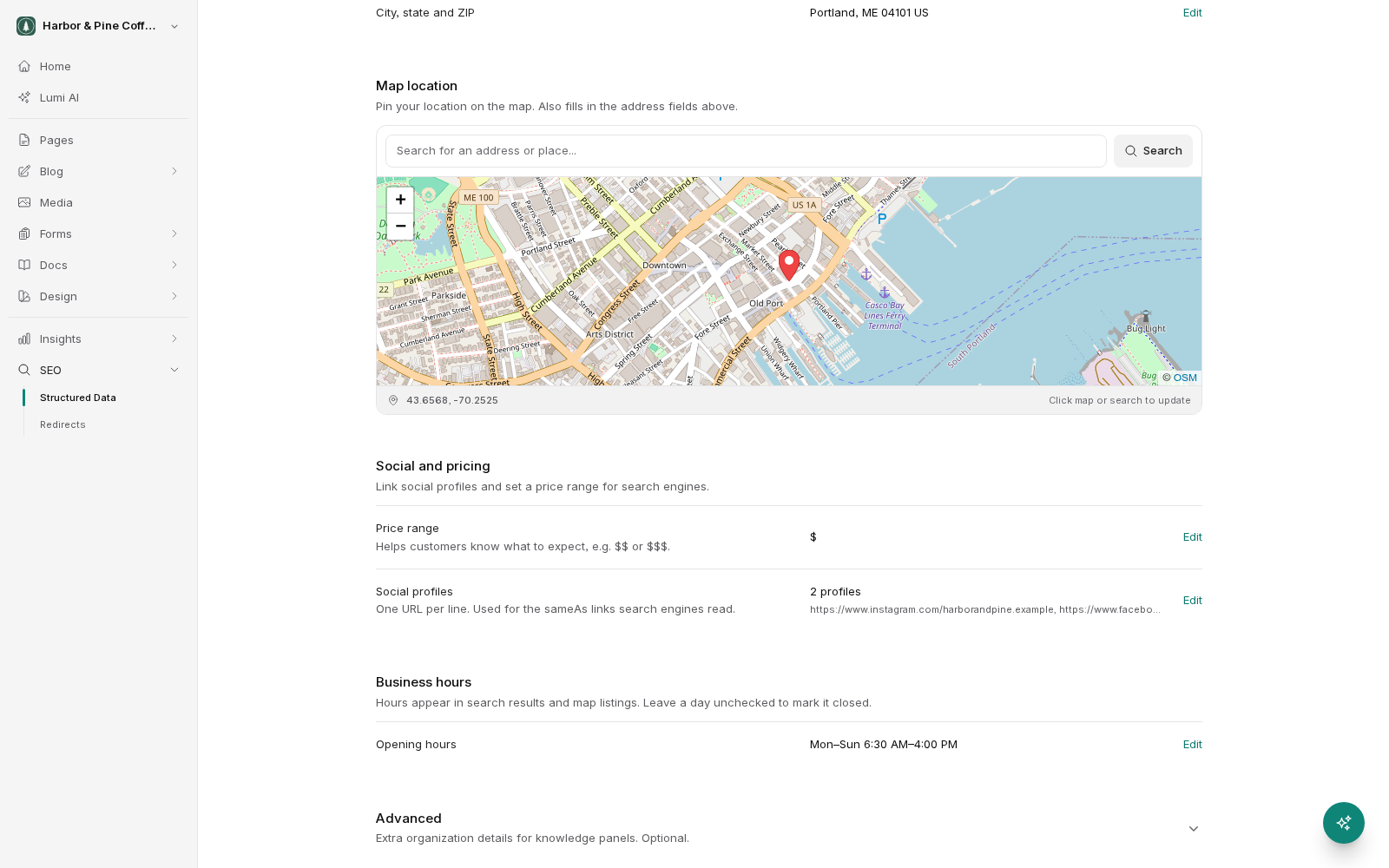
- Map location. A picker for pinning your exact position. Useful when your street address is ambiguous, or the building entrance is not where an address lookup places it.
- Social profiles. Links to your accounts on other platforms. This connects those profiles to your business in a search engine's understanding.
- Price range. A broad indication of what you cost. Optional, and only worth filling in if it helps set expectations for your kind of business.
- Business hours. When you are open. Keep these current, particularly around holidays. Wrong hours send customers to a closed door, which is worse than no hours at all.
Keep it consistent with everywhere else
Whatever you enter here should match what is on your other listings: your map listing, your directory entries, your social profiles. Search engines cross-reference these, and conflicting details make them less confident about all of them.
The most common problem is a phone number or address that was updated in one place but not the others. If you move or change number, update every listing at the same time.
Instant Indexing
Instant Indexing, also called IndexNow, is not on this screen. It is in Settings → Integrations, under Search. When you publish or change a page, it tells participating search engines that something changed, rather than waiting for them to come and check.
This does not make you rank higher and it does not force anything to be indexed. It shortens the delay before a search engine knows about a change. Useful when you have updated prices, changed opening hours, or published something time-sensitive.
Turn it on and forget about it. See Search engine indexing for how it fits with sitemaps.
When to revisit this
Come back to this screen whenever a fact about your business changes: new phone number, new premises, different opening hours, a social account you have started or stopped using. It is not a set-and-forget screen, but it is close.